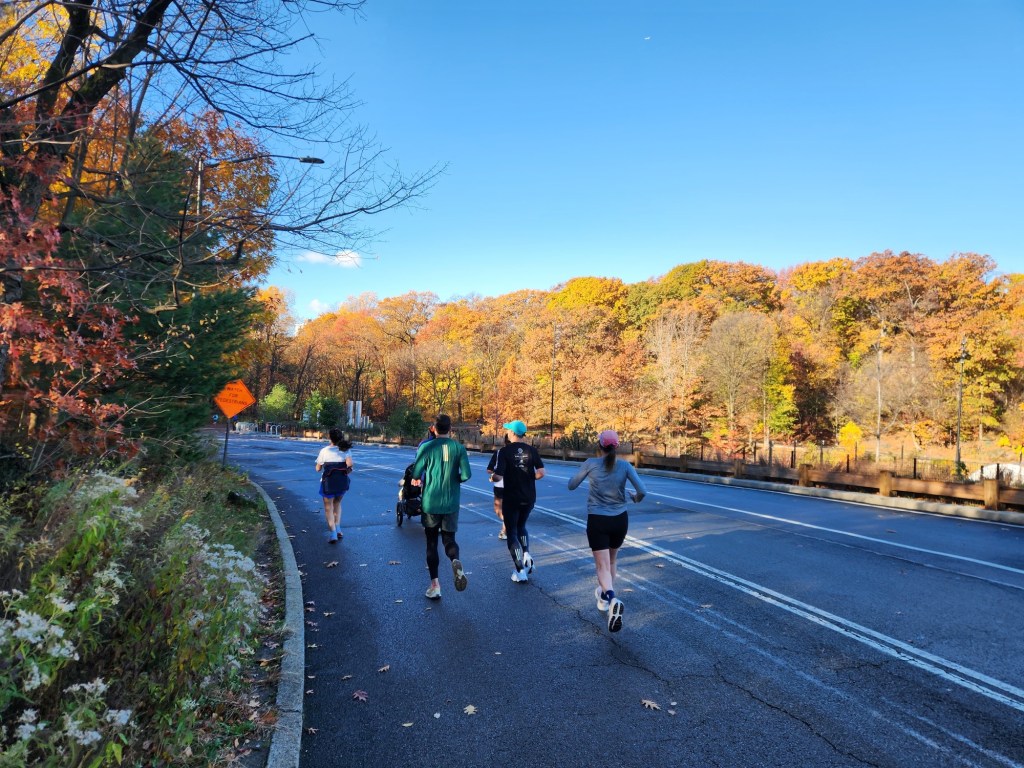
Fall marathon season is winding down, and while some runners still have big races ahead, others are already thinking about what’s next. Boston? London? A spring PR? Your first 26.2?
Here’s something I often remind my athletes: Spring marathon goals don’t wait until spring. But that doesn’t mean you need to train like it’s race month in November.
Sometimes the smartest thing you can do right now is a little less.
First things first: actually recover
I’ll admit it. I didn’t always appreciate proper marathon recovery. Even after 23 marathons, I’m still learning how much the distance takes out of your body, even when you feel pretty good afterward.
A PT once told me it can take around 26 days for the body to fully recover from a marathon. That’s not a magic number, and everyone recovers differently, but it stuck with me. Feeling good and being fully recovered aren’t necessarily the same thing.
And then comes the temptation. It’s peak fall running weather, you’ve got all that marathon fitness, and suddenly a Turkey Trot is calling your name. Maybe a shiny new 5K PR? An age-group win?
Been there. Done that. Regretted it.
For me, pushing too soon has meant lingering tightness, little niggles, or an annoying issue that follows me into the next training cycle. And if something was already bothering you toward the end of your fall training? Now is the time to truly back off. Not take one day off, test it again, and repeat that cycle for weeks.
Recover now so you can train properly later.
Have a Turkey Trot on the calendar? Great! But consider whether you’re actually ready to race it all out. Maybe it’s a controlled tempo, a fun run with friends, or just an excuse for some post-race pie. Not every race needs to be a full send.
Build back before building up
Once you’ve given yourself time to recover, start with easy running and see how your body responds. Rebuild consistency first, then gradually bring back longer efforts and speed.
One of the biggest mistakes I see is runners doing too much, too soon. They feel good enough to run, so they assume they’re ready to train hard. Not always the same thing!
There’s nothing wrong with enjoying a few weeks of lower mileage and less structure, especially after a big fall race.
Work on the runner, not just the race
This is a great time to tackle the things that often get pushed aside during a marathon build.
Maybe that’s strength training, better fueling habits, mobility, learning to slow down on easy days, or finding a schedule that works around your job, family, and everything else life throws at you.
I love this phase as a coach because we have room to work on consistency and habits without every workout revolving around race day.
So when should spring marathon training start?
It depends! Your running background, current fitness, race date, and recovery all matter. But for many runners with an established base, 16 weeks of marathon-specific training is a useful starting point (or 20 incl a 4 week base).
Here’s a general guide:
- March marathon: You’re likely already building or getting ready to start more structured training.
- Early April marathon: November and December can be about recovery, rebuilding consistency, and base work before race-specific training ramps up.
- Late April or May marathon: You’ve generally got more room to recover, build strength, and establish a solid foundation before the bigger workouts arrive.
These aren’t hard rules, and the timeline will look different for a first-time marathoner versus someone who’s been running consistently for years.
The point is to build a plan around the runner, not force the runner into an arbitrary plan.
The bigger picture
The goal isn’t to arrive at your spring marathon exhausted from months of chasing fitness. It’s to arrive healthy, confident, and ready to put your training to work.
So enjoy the fall weather, take the recovery you need, and remember that progress doesn’t always mean doing more.
Sometimes it’s knowing when to do less.
Thinking about a spring marathon? I coach runners of all paces, from first-timers to experienced marathoners chasing their next PR, with personalized virtual coaching that fits around real life.

